11th February 2026
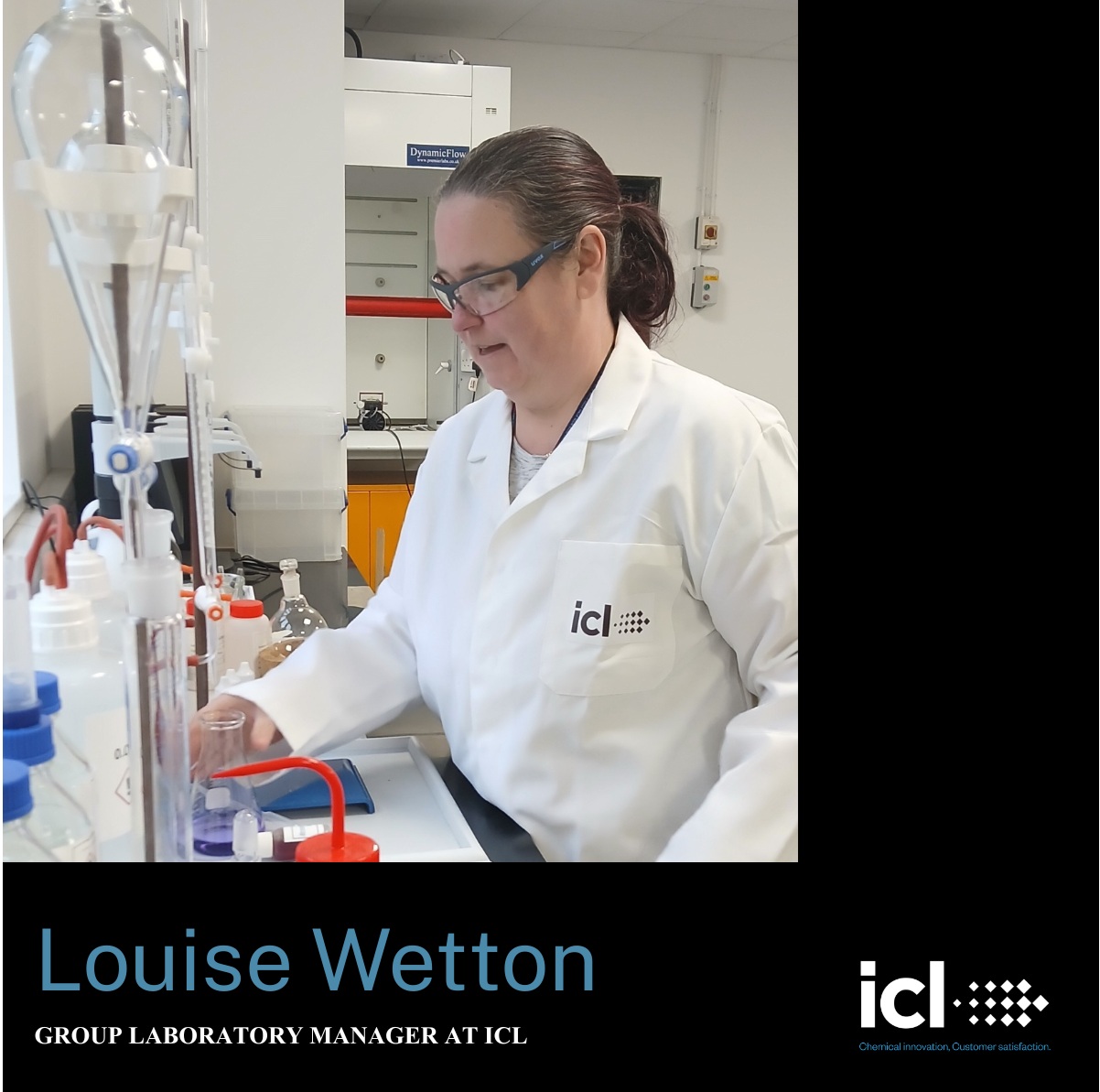
To celebrate International Day of Women and Girls in Science, we sat down with Louise Wetton, Group Laboratory Manager at ICL, to learn more about her journey into the world of science, the experiences that shaped her career, and the insights she’s gained along the way. Through this Q&A, we aim to highlight the diverse pathways into STEM, the real-life challenges and successes women experience in the industry, and the passion that drives scientific discovery every day. By sharing Louise’s story, we hope to inspire the next generation of women and girls to explore opportunities in science and to see first-hand the impact that curiosity, resilience, and dedication can have on a rewarding career.
My interest in science began at a very young age, with space as my first inspiration. My Dad worked for NASA and helped build the engines for the space shuttles, which made science feel exciting and close to home. I filled my bedroom with miniature space shuttle toys, and my walls were covered with stars and planets. I was also fortunate to attend several space shuttle landings at Edwards Air Force Base in California, and I even had the unforgettable opportunity to walk inside a shuttle and sit in the cockpit. Those early experiences sparked a lasting curiosity in science.
A defining moment for me came in my first job after university, when I joined a wastewater treatment company and gained my first experience in a professional laboratory. There, I learned a wide range of lab techniques and worked with many analytical instruments, including my first encounter with an ICP-OES. The instrument itself was already about 15 years old and prone to breakdowns, which turned out to be a great learning opportunity.
I often took the initiative to troubleshoot issues, learning how to clean the spray chamber and lenses, replace the torch, and change pump tubing. My colleagues liked to joke that I had the patience of a saint because I was always happy to spend time figuring out the instrument and exploring different methods for testing metals and other elements.
Each day in the lab brought new challenges and discoveries, and I found real satisfaction in hands-on, practical work. That experience made it clear to me that this was the field where I belonged, and I couldn’t imagine pursuing a different career path.
One of the biggest challenges I faced early in my career was becoming a parent at a young age while still pursuing my education and professional goals. I had my first child at 21 during my second year of university, and my third child at 27, just as I was beginning my laboratory career.
Balancing work and family life with three young children was certainly demanding and required strong time management. I was fortunate to have a supportive family network, which made a meaningful difference and allowed me to stay focused on building my career. That period taught me resilience and prioritisation—lessons that have continued to help me throughout my professional journey.
To me, managing multiple scientific labs reflects the hard work and dedication I’ve put into my career. I’ve been working in laboratories for nearly 18 years, starting out as a lab technician and gradually progressing through each new role I’ve taken on, both with ICL and in previous positions.
With every step, I’ve aimed to keep learning, improving, and contributing more to my team and organisation. Growing from an entry-level role to where I am now has been a rewarding journey, and it’s something I’m genuinely proud of. It shows what can be achieved with persistence and a commitment to doing your best.
I’ve been fortunate throughout my career to work alongside senior colleagues who were generous with their knowledge and willing to teach me not only the responsibilities of my role, but also a wide range of additional techniques and skills. Their guidance helped me build both confidence and expertise in the lab.
I’ve been with ICL for nearly 14 years, and during that time Steve (Rollins) has been one of the senior team members who has supported my development and helped me grow professionally. Having access to experienced colleagues who are willing to share what they know has made a meaningful difference in my journey.
My advice would be to give it a try—because you never truly know what you’ll love until you experience it firsthand. Exploring different areas of science can help you discover where your interests and strengths really lie.
As a teenager, I thought I wanted to become a doctor, but I later realised biology wasn’t the right fit for me. That led me to study chemistry at university, where I completed my thesis on carbon compounds in petrochemicals, and eventually to a career in the water treatment industry.
Staying curious, being open to new opportunities, and allowing your interests to evolve can lead you to a career that’s both fulfilling and exciting.
Beyond technical knowledge, practical skills are incredibly important. You don’t have to be the strongest in chemistry theory to succeed in a lab—being able to carefully follow methods and carry out testing accurately is just as valuable. Over time, your technical knowledge naturally grows through experience.
Teamwork is also essential. In most laboratory settings, you’re rarely working entirely on your own; you’re part of a team collaborating on shared goals. Being reliable, communicating clearly, and supporting your colleagues all contribute to a successful and positive lab environment.
What excites me most about the future of science is the constant discovery and the opportunity to keep learning. There is always something new emerging, which makes the field dynamic and inspiring to be part of.
I’m also excited by how a simple idea can grow into a breakthrough that changes the way we do things. Many major advancements start with someone asking a thoughtful question or looking at a problem differently. That sense of possibility is what makes science so motivating and full of potential.
I’ve been fortunate in my own experience to work in environments that are supportive of women in STEM. I’ve been at ICL for 14 years, and I’ve seen strong representation of women across many areas of the company—from management and laboratory roles to operations, maintenance, and office staff.
From my perspective, continuing to create inclusive workplaces where women have opportunities to grow, take on leadership roles, and be supported in their development is key. In my own team, I’m proud to work with seven women in our labs, and it’s encouraging to see more women building successful careers in this field.
Age really doesn’t define a chemist! Our team spans a wide range, from early 20s to 50s, and it’s always surprising—and delightful—how easily everyone connects. It’s especially fun to watch our newer chemists, fresh out of university, quickly build friendships and collaborate seamlessly with the more experienced members of the team.
Louise’s story is a powerful reminder that there is no single path into science—only a shared commitment to learning, growth, and innovation. At ICL, we recognise the importance of creating an inclusive environment where women can thrive, lead, and continue to shape the future of STEM. Celebrating International Day of Women and Girls in Science is not only about recognising achievements, but also about actively supporting and showcasing the incredible talent within our industry. By investing in people, championing diversity, and encouraging new voices to enter the field, ICL remains committed to helping build a stronger, more inclusive future for science.